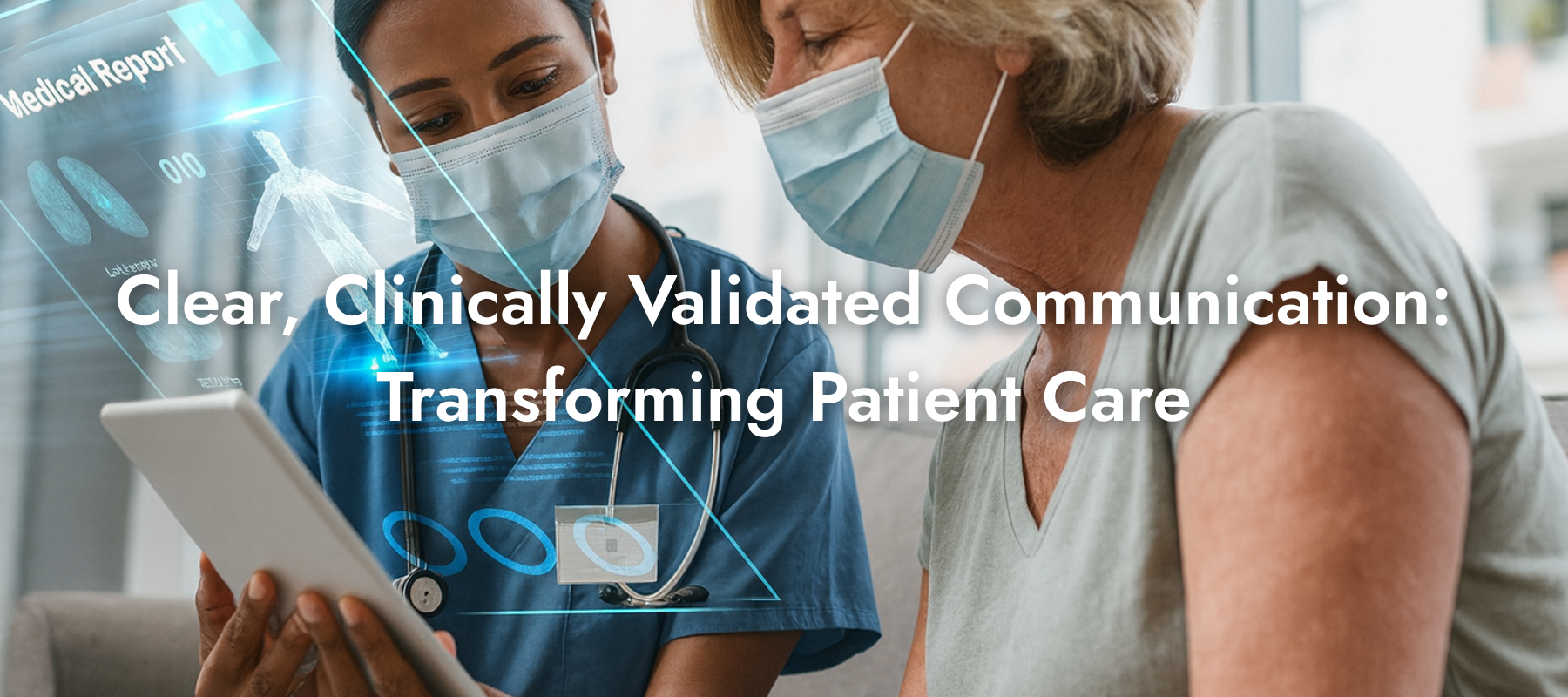
Clear, Clinically Validated Communication: Transforming Patient Care
The First 60 Minutes after Diagnosis Often Dictate the Next Six Months of a Patient’s Care.
Maya felt the room tilt when the rheumatologist finally named it, systemic lupus erythematosus. Stunned, she kept nodding, promising she got it, even as the explanations dissolved into static. She clutched the bulky discharge packet, telling herself that at home, away from the rising panic, she’d re-read every word and the whole conversation would click. Yet on the bus ride back, terms such as anti-dsDNA titers, steroid-sparing immunosuppressants, and complement C3/C4 levels stared back like a foreign language. The very document meant to guide her next steps now magnified her confusion, setting the stage for missed doses, needless flare-ups, and preventable ER visits. Without clear, accessible communication, many patients like Maya struggle to follow their treatment plans, leading to avoidable hospital visits, complications, and poorer health outcomes. This affects anyone, from those managing diabetes or heart disease to patients facing acute conditions or preventive screenings.
The Persistent Challenge of Health Literacy
Despite advances in medical science and digital health technologies, nearly 90% of U.S. adults struggle to comprehend the information their healthcare providers share. Digital portals have multiplied, and Telehealth is now mainstream, yet comprehension has not improved. Most systems still hand patients the same dense PDF summary and hope they decode it at home. Worldwide, this problem spans age groups and socioeconomic backgrounds, but is most pronounced among chronic illness patients, seniors, and non‑native speakers. Misinterpreted instructions can cause medication errors, reduced adherence to treatment, increased hospital visits, and higher care costs.
Technology Is Not the Whole Prescription
Digital health is advancing rapidly. By 2025, 80% of U.S. physicians will rely on Telehealth, and hospitals are heavily investing in connected platforms. These tools accelerate information sharing and broaden access, but they address only part of patient care. Comprehensive care includes medications, follow-up appointments, medical devices, treatment protocols, and direct interactions with clinicians. Unless patients understand why each medication is prescribed, how to operate a device, and what their next steps are, even the most sophisticated technologies cannot deliver full benefit. Unlocking the promise of modern healthcare requires clear, personalized explanations in plain language at every touchpoint, from the clinic to the patient’s home.
Establishing a New Standard Beyond AI: Clinically Validated Communication
At Patiently, we recognize that effective patient communication is foundational to positive health outcomes. Our approach is rooted in the principle that every piece of health information delivered to patients should be clinically validated and presented with clarity. Leveraging advanced natural language processing and a rigorously maintained medical knowledge base, we translate complex clinical language into explanations that are both precise and understandable. Unlike solutions that rely on black box algorithms or probabilistic text generation, each Patiently explanation is fully traceable to peer-reviewed research and aligned with current medical guidelines. This evidence-based approach deepens patient understanding and builds confidence among clinicians, payers, and health systems.
Driving Patient Engagement and Healthcare Efficiency
Having set a new benchmark for communication, Patiently next demonstrates a measurable impact on engagement and efficiency. Clear, trustworthy explanations increase patients’ confidence and encourage them to take an active role in their care. Studies show that improving health literacy reduces readmission rates by up to 20% and increases medication adherence by 15%. By making complex information accessible, Patiently delivers better clinical metrics, lowers costs, and streamlines workflows for providers.
Looking Ahead: A Future of Truly Patient-Centered Care
As healthcare evolves, demand for personalized, clinically sound communication will intensify. Patiently is committed to leading this transformation, ensuring every individual has access to the clear information they need to make informed decisions. Patiently is expanding multilingual support, integrating seamlessly with electronic health records, and scaling our clinical processes. Together with our partners, we envision a future where no patient ever feels lost in translation. But we do more than clarify information. We foster earlier engagement with patients, improve screening processes and communication from the very first interaction with the healthcare system, and support more efficient and optimized workflows for healthcare providers.
,
About the author
A medical engineer who grew to learn more about how Patiently can empower your patients and clinical teams, visit patiently-app.com. Join us in setting a new benchmark for health communication and patient engagement.




Subscribe Now to the Bio-Startup Standard
Notify me for the next issue!